




Which Audio Effects Plugin Is Best for Mixing?

If you’ve ever asked, which audio effects plugin is best for mixing?, you’re not alone. Every producer wants clarity, punch, warmth, and professional balance.
But mixing isn’t about one magic plugin — it’s about using the right tools for the right job.
In this guide, we’ll break down the best mixing plugins, explain how they work, and show you which types of audio effects plugins matter most.
What Makes an Audio Effects Plugin Best for Mixing?
Before choosing the best plugin, understand what mixing requires:
- Frequency balance
- Dynamic control
- Stereo depth
- Harmonic enhancement
- Space and ambience
A great mixing chain usually includes:
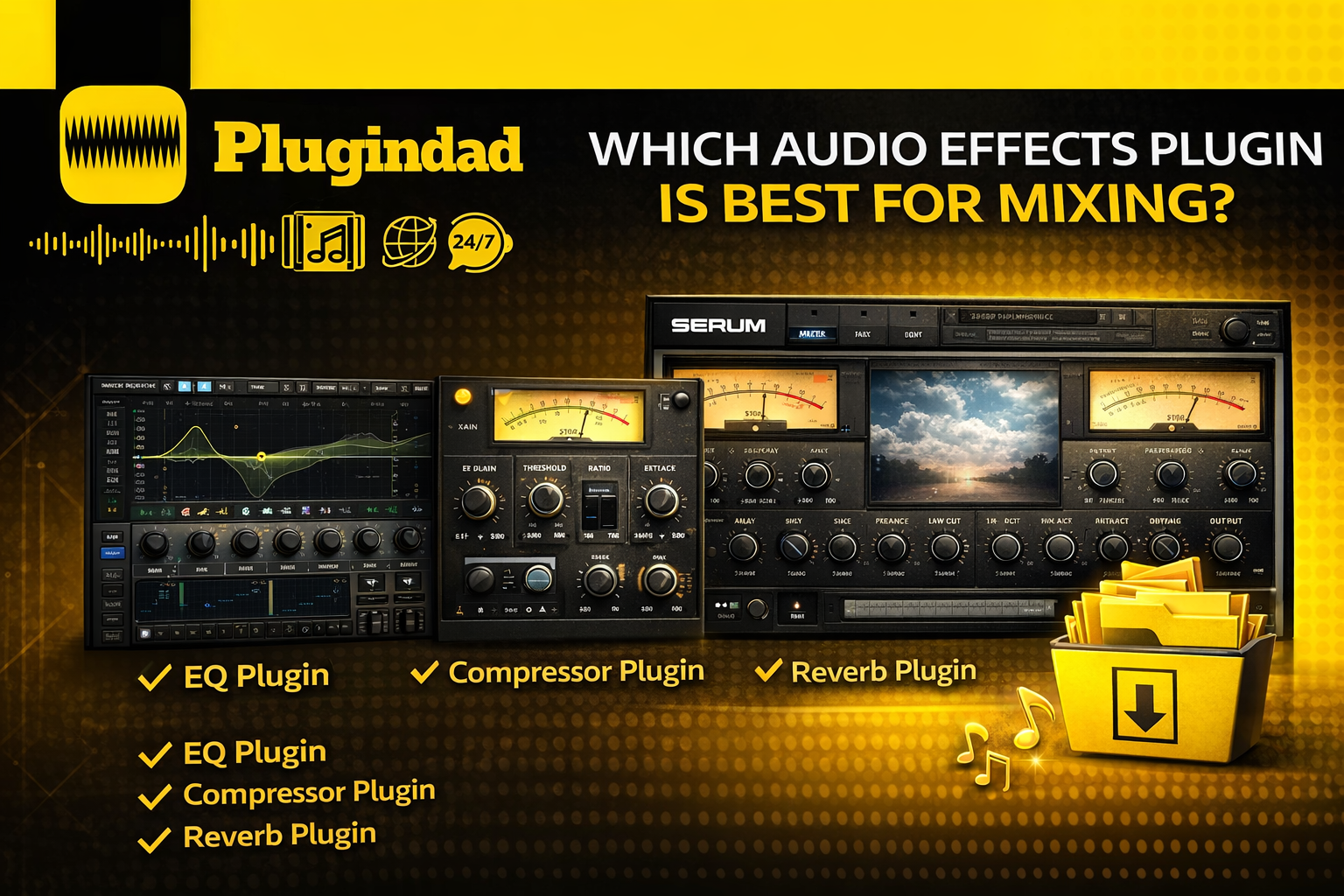
- EQ plugin
- Compressor plugin
- Reverb plugin
- Delay plugin
- Saturation plugin
Best EQ Plugin for Mixing
An EQ (Equalizer) is the foundation of every mix.
Why EQ Is Essential
EQ helps with:
- Removing unwanted frequencies
- Enhancing clarity
- Creating separation between instruments
- Improving tonal balance
Recommended Type
A parametric EQ plugin is best for precision mixing.
Look for:
- Transparent sound
- Linear phase option
- Dynamic EQ capability
- Mid/side processing
EQ is often the most important audio effects plugin in mixing.
Best Compressor Plugin for Mixing
Compression controls dynamics and adds punch.
Types of Compressors
- VCA compressor (clean & punchy)
- Optical compressor (smooth & musical)
- FET compressor (aggressive & fast)
- Glue compressor (bus cohesion)
Why Compression Matters
Compression provides:
- Dynamic control
- Consistency
- Punch for drums
- Vocal stability
- Mix bus glue
A VCA-style glue compressor is often considered one of the best tools for mix bus processing.
Best Reverb Plugin for Mixing
Reverb adds space and depth.
Reverb Types
- Plate reverb
- Hall reverb
- Room reverb
- Algorithmic reverb
- Convolution reverb
For professional mixing, a high-quality algorithmic reverb plugin works best for flexibility and CPU efficiency.
Best Saturation Plugin for Analog Warmth
Saturation adds harmonic richness and subtle distortion.
It enhances:
- Analog warmth
- Presence
- Depth
- Perceived loudness
Tape saturation and tube saturation plugins are popular choices.
Best All-in-One Mixing Plugin
Some producers prefer channel strip plugins that combine:
- EQ
- Compression
- Saturation
- Gate
These are efficient for workflow and CPU usage.
Mixing Plugin Chain Example
Here’s a simple professional mixing chain:
- Subtractive EQ
- Compression for dynamic control
- Additive EQ
- Saturation
- Reverb (send channel)
- Limiter (if needed)
This combination usually answers the question:
Which audio effects plugin is best for mixing?
The truth is — it’s a combination, not a single plugin.
How to Choose the Right Mixing Plugin
Ask yourself:
- Do I need transparency or color?
- Is this for vocals, drums, or mix bus?
- Do I want analog warmth?
- Do I need precise frequency control?
Professional mixing engineers choose plugins based on purpose, not brand.
Beginner vs Professional Mixing Plugins
For Beginners:
- Clean parametric EQ
- Simple compressor
- Stock DAW reverb
For Professionals:
- Dynamic EQ
- Multi-band compression
- Advanced reverb engines
- Harmonic saturation tools
So, which audio effects plugin is best for mixing?
The best approach combines:
- A transparent EQ
- A reliable compressor
- A professional reverb
- Optional saturation
There is no single “best” plugin — the best mixing setup is a balanced combination of tools that deliver clarity, depth, and dynamic control.
An EQ plugin is the most important because it controls frequency balance and clarity.
No, skill matters more than price. Even stock plugins can achieve professional results
A VCA glue compressor is widely preferred for mix bus compression.
Saturation plugins such as tape or tube emulations add analog warmth.
Channel strip plugins can combine multiple effects, but separate tools often provide better control.
Key Takeaways
- Mixing requires the right combination of audio effects plugins for clarity, balance, and dynamic control.
- Key plugins include EQ, compressors, reverb, and saturation, each serving unique roles in the mixing process.
- Selecting the best audio effects plugin depends on specific needs like transparency, tonal balance, and application.
- Beginners should start with basic tools, while professionals may prefer advanced features for precise control.
- Ultimately, there is no single best plugin; effective mixing relies on a thoughtful combination of tools.
The best audio effects plugin for mixing depends on your needs, but top choices include a transparent EQ plugin, a glue compressor, and a high-quality reverb plugin. For professional results, engineers typically use a parametric EQ for balance, a VCA compressor for dynamic control, and a studio-grade reverb for depth and space.